29 May 2024
Posted at 07:40
in Feature
Lisa Sinnott, a dog behaviourist who qualified in clinical animal behaviour with The University of Edinburgh Royal (Dick) School of Vet Studies is the founder of St Paws Training Academy. As part of National Pet Month she offers her top tips for preparing for off-lead walks with your dog.
We’ve had some beautiful weather the last few weeks (with a mix of rain of course… there’s no doubt we live in the UK!) Off-lead exercise can be wonderful for a dog’s physical and mental health. But of course, our dog’s don’t come pre-trained!
Safety is paramount so a solid recall cue is really important, as it can be stressful and scary when a dog doesn’t come back when you call them.
Equipment is an important factor so here is some guidance on what to buy:
- A collar with a sturdy tag for your dog’s ID. Quite often, round dangling tags can get lost so a flat attachment can help avoid this.
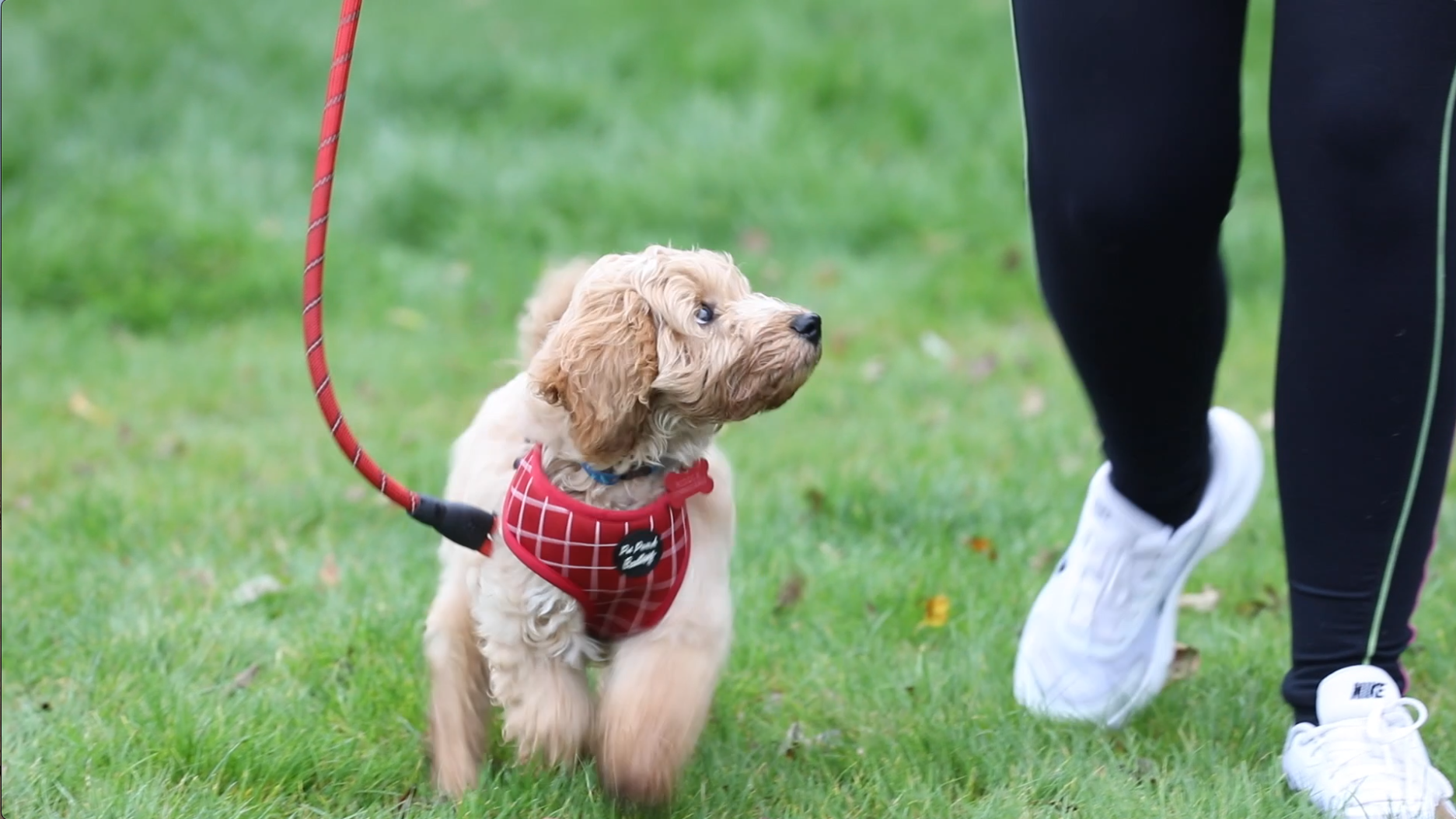
- A well-fitting harness is important. A loose one could mean your dog finds itself getting stuck on branches.
- Long-handled toys can be great to encourage your dog to come along with you more swiftly. Lots of dogs will enjoy chasing after them along the ground.
- A treat pouch can be helpful so you can easily access something to reward your dog for checking in with you.
- A biothane lead does not get all wet and soggy and can allow your dog to have some freedom of movement while you’re working on their recall. It also prevents your dog from rehearsing a behaviour you don’t want them to (practice makes perfect after all).
- Even after lots of recall training, letting your dog off-lead for the first time can be nerve-wracking. A tracker that you attach to their harness means you can see their location on your phone via GPS.
Games - We need to try and be more exciting than what is happening in the environment… there are a lot of competing motivators out there.. smells, squirrels, other dogs! Here are some games you can try.
- Hide and go treat! – Simple scentwork activities can keep your dog engaged and close to you. You can put treats in the long grass or on logs and allow them to search and track them out. While their nose is down and searching you can pair this with some words such as “find it’.
- Go get it – Use the long dangly toy to encourage your dog in the opposite
- direction to whatever they are distracted by. Dangling along the floor can encourage them to chase it.
Specific training - How do you create a solid recall cue? Start with a marker word. A clicker or marker word is used in the precise moment that your dog offers a behaviour that you would like.
- It marks the behaviour given, and after this a treat should be given. The clicker or marker word indicates to the dog that it’s done something you like.
- After bring repeatedly associated with a treat or reward, a clicker becomes a conditioned ‘reinforcer’. A conditioned ‘reinforcer’ is a stimulus which becomes rewarding when paired with other reinforcing stimuli.
- You may have heard about Pavlov’s dog which resulted in the dog salivating at the sound of a bell as that becomes a predictor of food!
- Decide on a marker word to mark specific points of behaviour. An example is “yes”. You’ll need a recall word too – this will be a word that follows your dog’s name so for example: “Abby, here!”
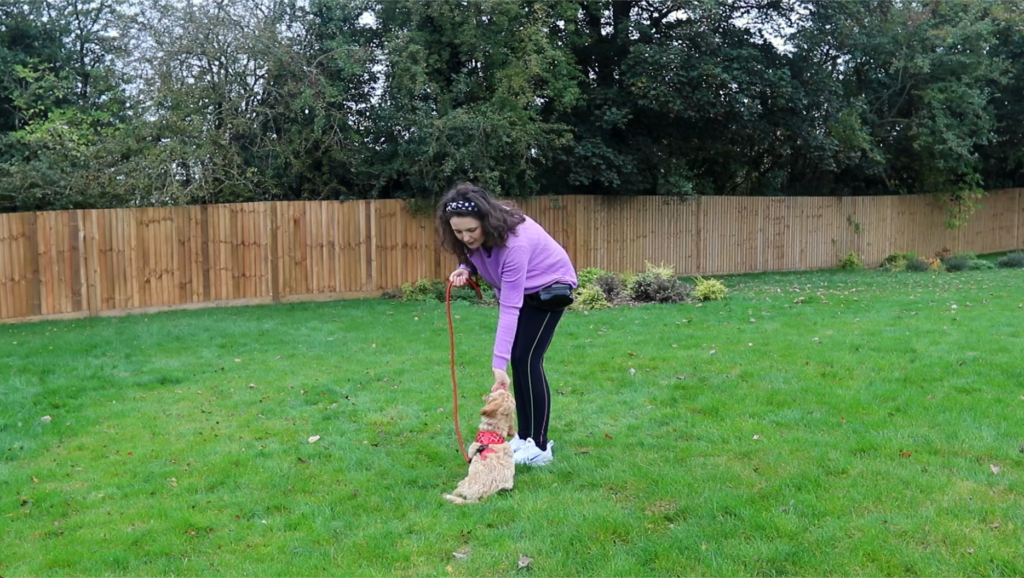
Teaching your dog their name - Start in a quiet environment, like the living room. When your dog is sitting in front of you, say their name and give them a treat.
- Do this in various positions and locations each day. For example, try standing up, sitting on the sofa, sitting on a chair, and when your puppy is beside you. Repeat this for a week, four times a day, for about 50 seconds each session.
- Testing it out: Wait until your puppy has moved away and is not looking at you. Say their name, and if they look at you, use your marker word “yes”; and reward them with a scrummy treat!
Teaching a recall word - Start in a quiet environment. When your dog is sitting in front of you, say the recall cue (e.g. “here”) and give them a tasty treat. Practice this in various positions and locations each day, repeating it multiple times. Always reward your dog each time you use the recall cue. To ensure your dog understands the cue in different settings, practice in different areas while using a long lead for safety.
What top mistakes do people make when recall training? - It’s easy to make mistakes when you don’t know how. Check these out so you don’t fall foul (and in anything foul while you’re chasing after your dog for that matter!)…
- Mistake 1: Saying your recall word over and over again
- If you say your recall word over and over again like a repetitive Kylie Minogue song then your dog is unlikely to respond to it and you’re likely to undo a lot of the hard work that you’ve built with associating it with food. Make sure you pick the right moment to call your dog in the beginning.
- Mistake 2: Proofing is in the pudding
- Proofing your recall to different environments and different distractions is imperative as your dog is likely to have different levels of distractions. Perhaps their number one distraction is other dogs. You’ll need to make sure you can proof their recall to one dog and then higher numbers of dogs.
- Mistake 3: Expecting too much too soon
- If you head out to a brand new area and expect your dog to come back instantly it’s very unlikely they will unless you have done training from different smells.
- Mistake 4: Not setting the dog up for success
- Allowing a dog to rehearse a behaviour over and over again such as running towards another dog and playing endlessly or chasing a cat will make it much harder to train recall as these examples are lots of fun for the dog and very self-reinforcing.
- Mistake 5: Always calling your dog back and popping their lead back on or calling them with your recall cue for things they don’t enjoy such as a bath
- If everytime you were on a night out with your best friend and your partner always rang you to tell you to come home, you’d probably stop answering the phone! This can be the same challenge if you only use your recall cue to end the fun. If safe, let your dog explore things they want to as a reward for checking in with you and coming back when you call them.
An important note
Sometimes not coming back when called is due to another underlying emotion such as fear. A dog, who is scared of some dogs for example, may run off to escape them as it will help them feel safer. It’s important to work on this separately (with behaviour modification) and in combination with recall training because if a dog is scared of something that will take precedent – they won’t be able to focus on training in hand. No one learns well when stressed.