


08 May 2024
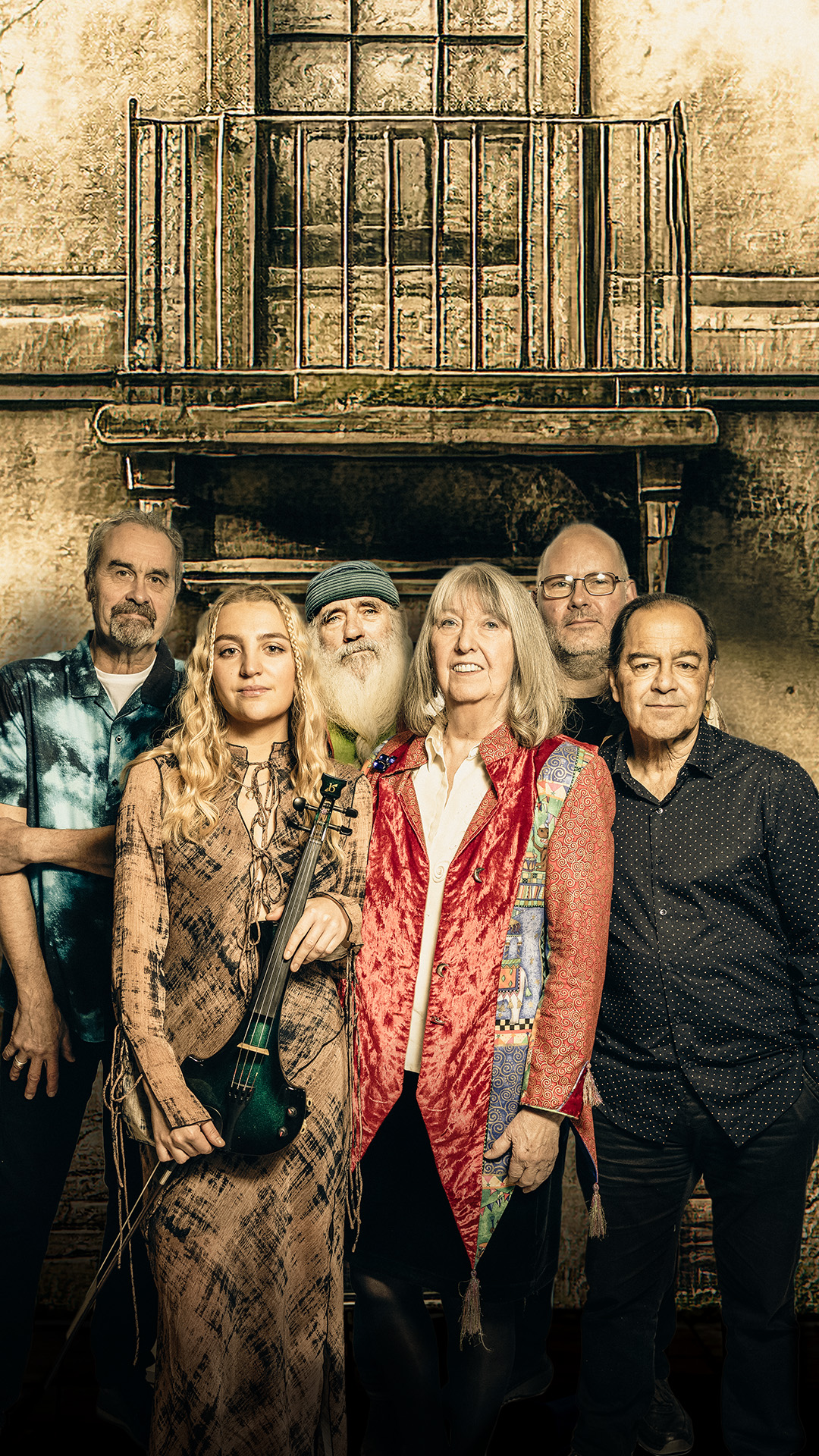
It was more than half a century ago that a teenage girl plucked from her native Blackpool began to carve out a niche for herself in the fledgling St Albans folk scene. Now, decades later, Maddy Prior is preparing to return to the city for a one-off gig at the Alban Arena.
She found fame as a member of Steeleye Span, travelling across the globe in the company of fellow St Albans resident and multi-instrumentalist Tim Hart, whose dad Dennis was the vicar at St Saviour’s Church.
In a career spanning 55 years, the folk-rock band have enjoyed four Top 40 albums and two hit singles with Gaudete and All Around My Hat, and it’s their anniversary tour which is bringing them back to St Albans.
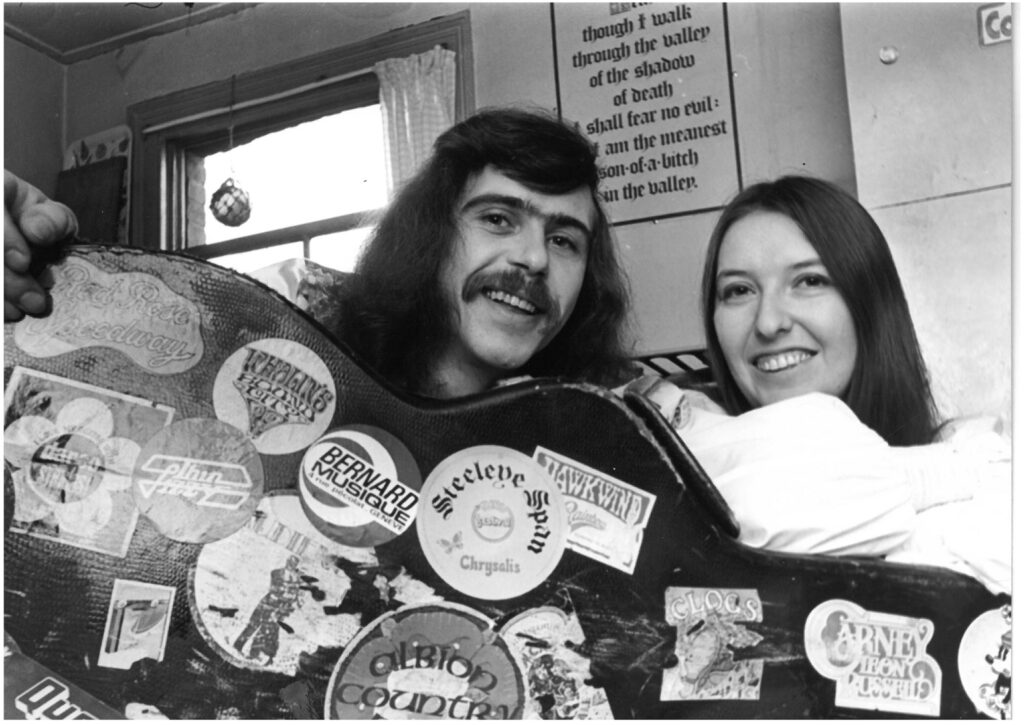
Pictures of Maddy and Tim in their heyday formed part of the collection of images donated to us by legendary local photographer Tony “Greg” Gregory, and were shared with the singer ahead of our interview, much to her appreciation.

So rather than go over familiar ground relating to Steeleye, our conversation therefore steered towards her recollections of growing up in St Albans, the venues she played in the district, and even where her old family home was located.
Although she cannot recall where those particular photos were taken, she does recall another occasion posing for Greg which subsequently made the local press.
“We had some photos taken when we did a gig at The Water End Barn. I think it was some kind of dinner and we did a short bit in it. But I remember Tim’s mum and dad and my mum and dad were there…”
Maddy moved to St Albans in 1959, when she was around 11 or 12, as her TV writer dad Allan was struggling to find work up North. He went on to create Z-Cars and Howard’s Way, so it was a lucrative move.
“I think Granada had just started [it began broadcasting in May 1956] but there wasn’t a lot of work to be done. [Writer and playwright] Arthur Swinson was his friend, and he lived [in St Albans] not far from the Cathedral, near the school. He said, ‘oh, you should come down here’, and Dad thought, ‘well, why not?’ So we did.
“It was quite a big move, and I have to say culturally it was a very different place, because in those days nobody had heard Northern accents, and they just thought I was stupid.”Maddy was educated at St Albans Girls School, and despite the initial hurdles with her accent, soon found growing up in St Albans in the early 1960s had plenty to offer.
“I very quickly discovered the jazz club. My brother was 18 months older than me, so he could go to a lot more places, and I could tag along, because he was theoretically looking after me.”
The club was located in the old Corn Exchange in Market Place, and hosted stars including Chris Barber, Humphrey Lyttleton and Terry Lightfoot.
“I started going to the jazz club when I was 13, I was very young, I shouldn’t have been in the pubs or anything but there you go.
“We also used to go to The Cock pub, which had a side bar which is now an Indian restaurant, I think [Alban Tandoori]. The side bar was where everybody gathered who kind of were hippies really, I suppose, or beatniks, or ravers I think they were, as distinct from mods and rockers.”
It was there that Maddy met folk singers Donovan and Mac MacLeod, as well as Tim Hart.
“Everybody went there. As a friend of mine said, if someone was wearing Levi’s, you knew them. That was kind of how it was.
“I didn’t know about the folk scene when I first went into town and got to know these people. I got to know about the folk scene probably a year later because I was friendly with a guy called Duffy who could play guitar, well that’s to say he could play about three chords, but that was still a big deal then!
“The people who were running the folk club at The Peahen at the time, Brian and Vicky, they said to him ‘do you want to come and join our band and play at the folk club?’ He said, ‘Oh, I don’t know about that. I’ll come as she comes’. They looked doubtfully at me and said, ‘oh, all right’ and that’s how I started singing folk.
“I sang at the folk club, Hemel Hempstead had The Spinning Wheel, we used to go to Hoddesdon, we used to travel around going to these different clubs.”
At the time everybody was singing American songs, so to focus on traditional English folk songs was something very different, even though it meant Maddy had a lot to learn.
“I’d learned a bit at school and that had put me off if anything. But [some friends] gave me these tapes, and I had a little tape player, a tiny mobile thing, and they said, ‘listen to that!’
“They had taped all this stuff totally illegally, but it was loads of these old singers, and I thought, ‘Oh my word, have I really got to listen to that?’ At first I thought, ‘oh God this is so boring’, but then there came a point where I thought a particular song was quite nice, and then I thought, ‘oh that’s quite good’, you kind of get your ear in it you keep working on something, so I could hear what the songs were and what the singers were doing.
“I’ve never been brilliant at oral learning, but I got it. Then I met up with Tim and he was into English folk, his family had always been interested, and we got together and started singing.”
Together they visited Cecil Sharp House, home of the English Folk Dance and Song Society, and sat and listened to their collection of songs until they found ones they liked. “These were all the old guys, [like legendary singers] Harry Cox and Fred Jordan. It was a fascinating time, and it was all new to me. The whole folk scene was just really getting ramped up, so that there were all these folk clubs all over the country.”
It was the oral tradition of singing these old songs which kept them alive, she explained. “A lot of them were country people who would have a local pub where they would go and sing, and each singer would have their own songs, and it was impolite to sing somebody else’s song. Some singers had vast repertoires, others not so much, some were happy to share and some were less keen.
“The interesting thing was that traditional singers didn’t just sing traditional songs, they would sing any song they liked, and it was only us coming in later that had a concept of traditional songs, so we were purists in some ways.”
In order to pick up more work, they soon realised they would have to travel. With Maddy’s employment history restricted to a week in a Wimpy bar she was happy to hitch to places to perform, even if her parents were unaware at the time.
“I went to South Wales, I went to Yorkshire, I went all over the place. Locally I was a resident at The Peahen and later in The Goat. We played in Elstree, in Radlett. I worked with Mac MacLeod for a while as well, and I remember seeing Donovan in the early days and he was absolutely brilliant. He had such a bounce about him and was so engaging on stage.”

Despite the different styles of music, Maddy also got to know fellow St Albans musicians The Zombies at this time: “They were good friends actually. I think Rod [Argent] was the first boy I ever kissed funnily enough! They lived in Chiswell Green and we used to go to the house for parties and things like that. We were all young at the same time.”
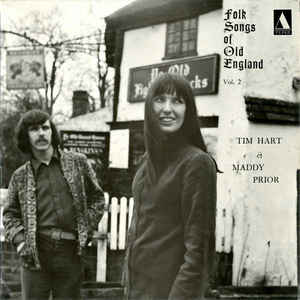
Maddy and Tim moved to London when she was around 19, making a couple of albums together – Folk Songs of Old England Vols 1 and 2 – the latter of which featured Ye Olde Fighting Cocks on the cover.
Their house, which was a mecca for folk musicians at the time, was visited by former Fairport Convention bass player Ashley Hutchings and his friend Terry Woods.
“We were sitting round a table, I think we were having dinner, and they said, ‘Do you wanna join a band?’ We had a rehearsal the next day and we said, ‘well, yeah, let’s give it a whirl’, and that’s how it went.”
It was late 1969, and Steeleye Span was born, but despite her growing fame, Maddy maintained her connection with St Albans.
“My parents were in St Albans for a very long time [in Waverley Road on the corner with Carlisle Avenue]. I think my mother came up to me in 2004.
“When I was living in north London and said we were going to move my dad said ‘Well I’ll put new carpets all through the house if you stay’! But once I moved away I stayed with them whenever we were down south so I saw a lot more of them.”
For the past 40 years she has lived in north-east Cumbria, but on May 17 Maddy will be returning to St Albans for a homecoming gig at the Arena: “I’ve got lots of friends still there, but it’s been a few years since I’ve been back.
“I mean, I love St Albans, it was a fantastic place to grow up in. My adolescence was basically in St Albans, and so I have really fond memories of it. For me, coming from Blackpool, which is a very new town in many ways, St Albans was just this ancient place, and all these old buildings that weren’t straight, you know, it drew me in, the history. Funnily enough I didn’t like history at school at all. It was only when I related it to song that it made sense to me.”
For tickets to Steeleye Span’s Arena gig, visit the box office at https://alban-arena.co.uk/events/folk-rock-pioneers-steeleye-span/
