29 Apr 2024
Elena Hogg, founder of local culinary company FOOD by Elena, cannot resist the temptations of chocolate..
There is nothing more enticing, more evocative, than a bowl of slowly melting chocolate. Stirring it is equally thrilling. Inhaling its scent ensnares your senses and imagination alike: suddenly you’re in a Willy Wonka-esque dream, surrounded by molten goodliness and the promise it holds of some rich and delicious dessert…
Just me?
Even if your daydreams aren’t as disquieting as mine, there is no doubt that chocolate is a firm favourite among many. Wikipedia tells me that we have been enjoying chocolate in some form or other since the year 3000 BC, or thereabouts. This is staggering. And apparently, seven million metric tonnes of chocolate go down the hatch worldwide each year. Also staggering, although less so when you remember how darn tasty it is.
In fact, it’s not just pure taste, or that silky texture, that compels us to consume: according to one website I looked at, the mere smell of chocolate triggers theta brain waves, which make you feel more relaxed. What’s more, chocolate contains something called tryptophan, a building block of seratonin, which is the hormone connected to… euphoria. Oh, yes.
Is it any wonder, then, that there’s an enormous and growing market for chocolate?
There’s a greater appetite now amongst consumers for high-quality chocolate, and it’s almost as though we’ve come full circle: early chocolate consumption in the UK was limited mostly to a bitter chocolate drink, but then in 1847, a chocolate company called Fry and Sons – the company that gave us our divisive Turkish Delight bar – produced a solid chocolate bar that used cocoa butter and sugar in the recipe to make it sweeter.
Now, though, many are seeking out the bitter notes in chocolate again, buying high-end, purer chocolate products to savour.
These sophisticated and ‘cleaner’ chocolates come at a pretty price, especially compared with the affordability of domestic brands. However, each cacao tree, on average, produces 45 pods per year, each of which contains roughly 40 beans.
That means about 1,800 beans are produced, but it takes 500 of them to produce just half a kilo of chocolate. Once you know this, it starts to make sense why good chocolate costs more.
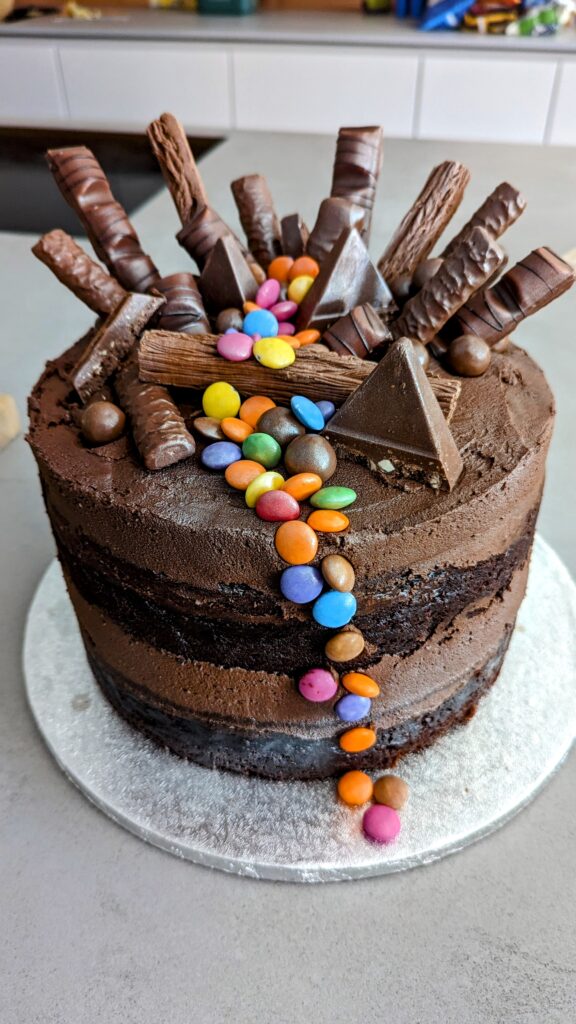
Moving on to the culinary side of things, I admit with considerable shame that no such fine-quality chocolate came anywhere near my son’s most recent birthday cake, which was practically obliterated by chocolate in various of his favourite incarnations. I think someone actually called it obscene and, when it comes to chocolate, there’s no greater compliment.
Chocolate is hugely versatile. Whether you’re in a café that has the crispiest-but-gooiest chocolate brownies, or at a street market that has a seller drizzling molten chocolate on steaming churros, or in a fancy restaurant about to indulge in a chocolate soufflé, chocolate offers something for everyone.
Unless you’re my husband, that is, who until the dreaded Covid pandemic didn’t like chocolate at all.
Then, when he had his first inevitable bout of Covid, something must’ve happened to his olfactory and gustatory receptors, because by April 2020, he was joining me in my ritualistic chocolate appreciation.
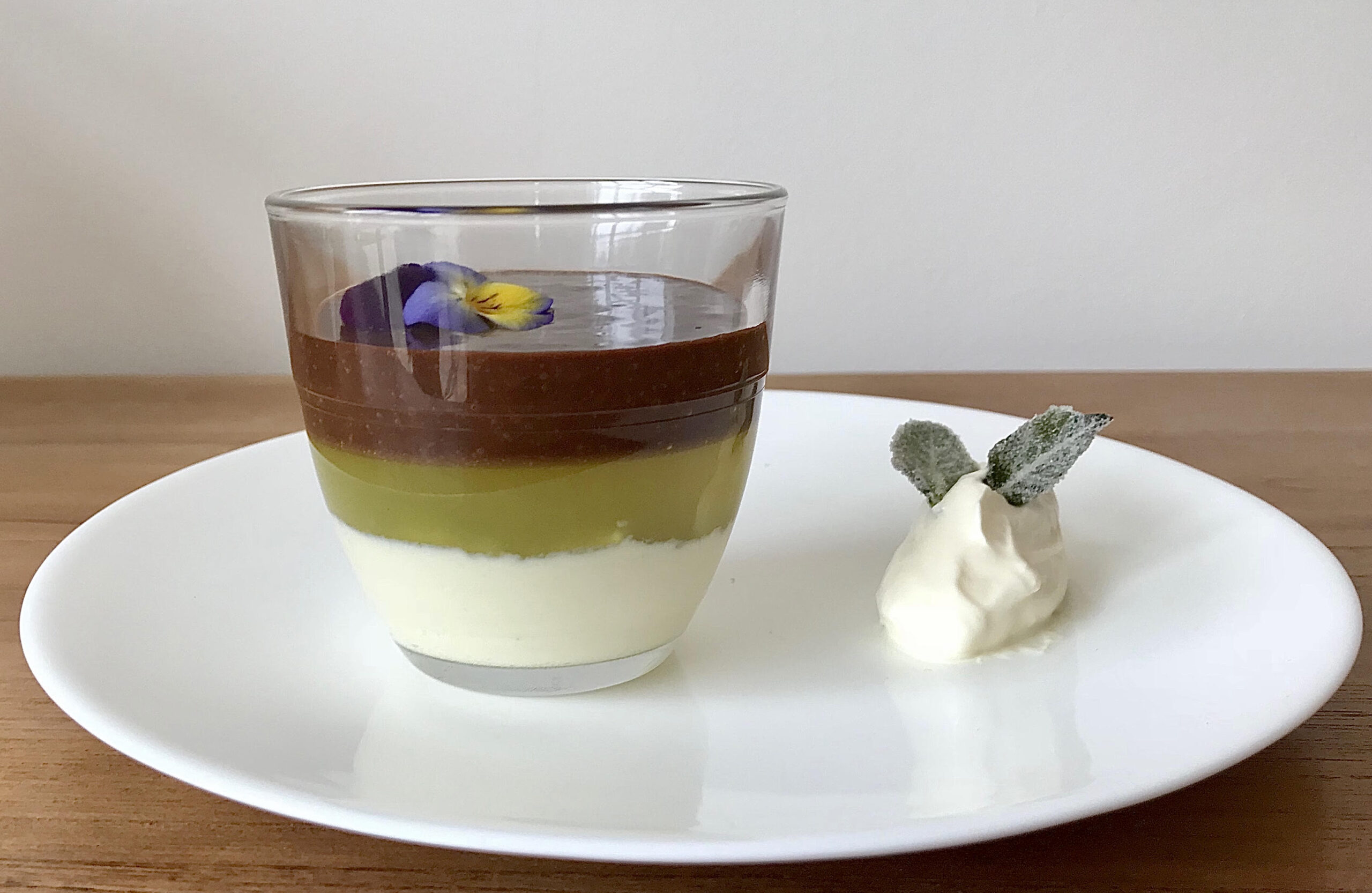
He didn’t join me, however, in my undying love of citrus and chocolate. One of my favourite concoctions is a layered dessert that I affectionately dubbed my lime-jaffa pud.
Where a Jaffa Cake uses orange (and chocolate orange is a classic combo – no arguments here), I used lime because I was making it for a client’s high-end birthday meal and it needed to have a point of difference.
Lime and chocolate is somehow more elegant than orange and chocolate. It also added a real sour note, which brought out the bitterness of the upper dark chocolate
layer, but was then soothed by the dulcifying white chocolate at the bottom.
I also adore the hallowed union of chocolate and mint. It’s possibly the loveliest ice cream flavour ever – little shards of cold dark chocolate that resist melting combined with the milky mintiness of the ice cream.
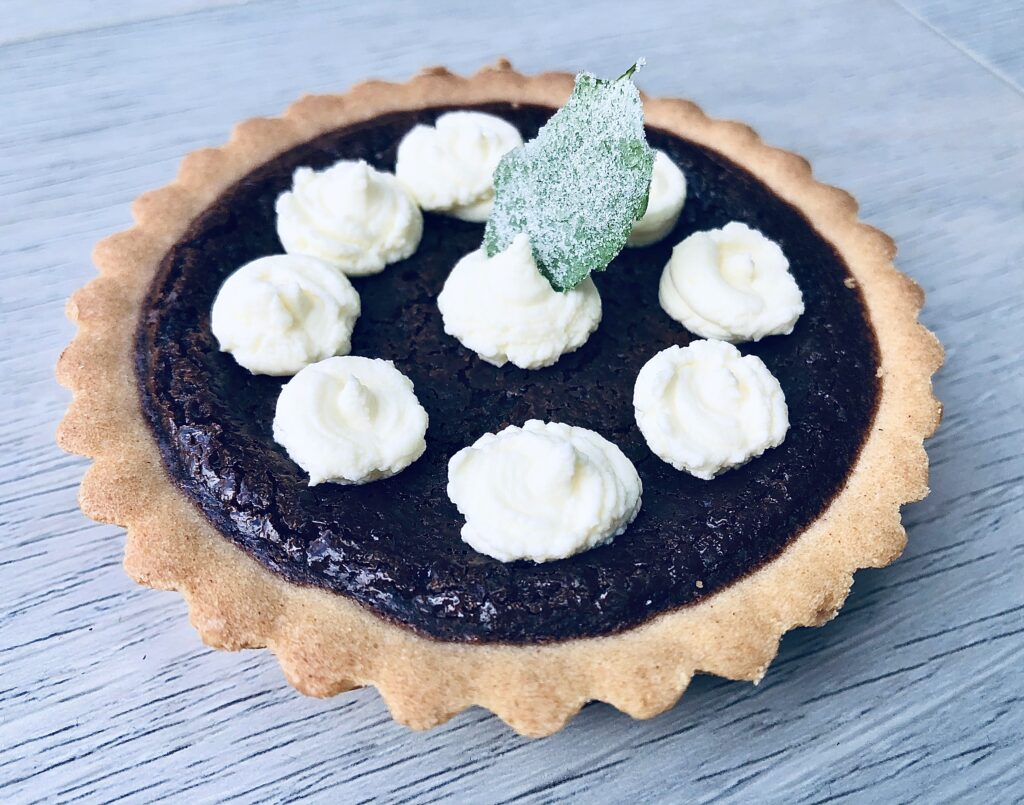
I love mint chocolate so much that I add little candied mint leaves to almost all my chocolate desserts. These morsels are small, but extremely potent in terms of mouth-feel, as I hope you’ll discover, dear reader, if you make some yourself. Just froth an egg white in a shallow bowl, and fill another with some caster sugar.
Work with one mint leaf at a time and use a paintbrush (yes, a regular one is fine as long there are no remnants of acrylic on it), to cover the leaf on both sides with egg white. Try and hold as little of the leaf as possible between your fingers so most of it gets covered or – better still – try and leave a tiny piece of stalk attached to hold.
Next, drag the mint leaf through the caster sugar – again, both sides – so it’s covered in a layer of sugar. Place it carefully on a plate or small tray and repeat with however many more you have. Allow at least six hours for them to dry out.
It can take less time if you pop them in an airing cupboard, but don’t be tempted to put them in the oven because they’re too delicate and will go soggy rather than dry
out. Once they’ve hardened fully, pop one in your mouth. The sugar coating will shatter like so many tiny ice crystals, releasing this fresh, cold whoosh of flavour.
It’s a minty mouth explosion and the perfect accompaniment to a decadent, intensely chocolatey dessert.
One final fun fact for you: an Aztec emperor named Montezuma is thought to have been the world’s first chocoholic due to the sheer volume of liquid chocolate he drank daily.
Although life expectancy at the time was just 30, Montezuma lived to the ripe old age of 54, which I’m taking to be a sure sign that chocolate is indeed good for you. Pass the truffles.